Pieces· Sample
Three ways to hold a stone
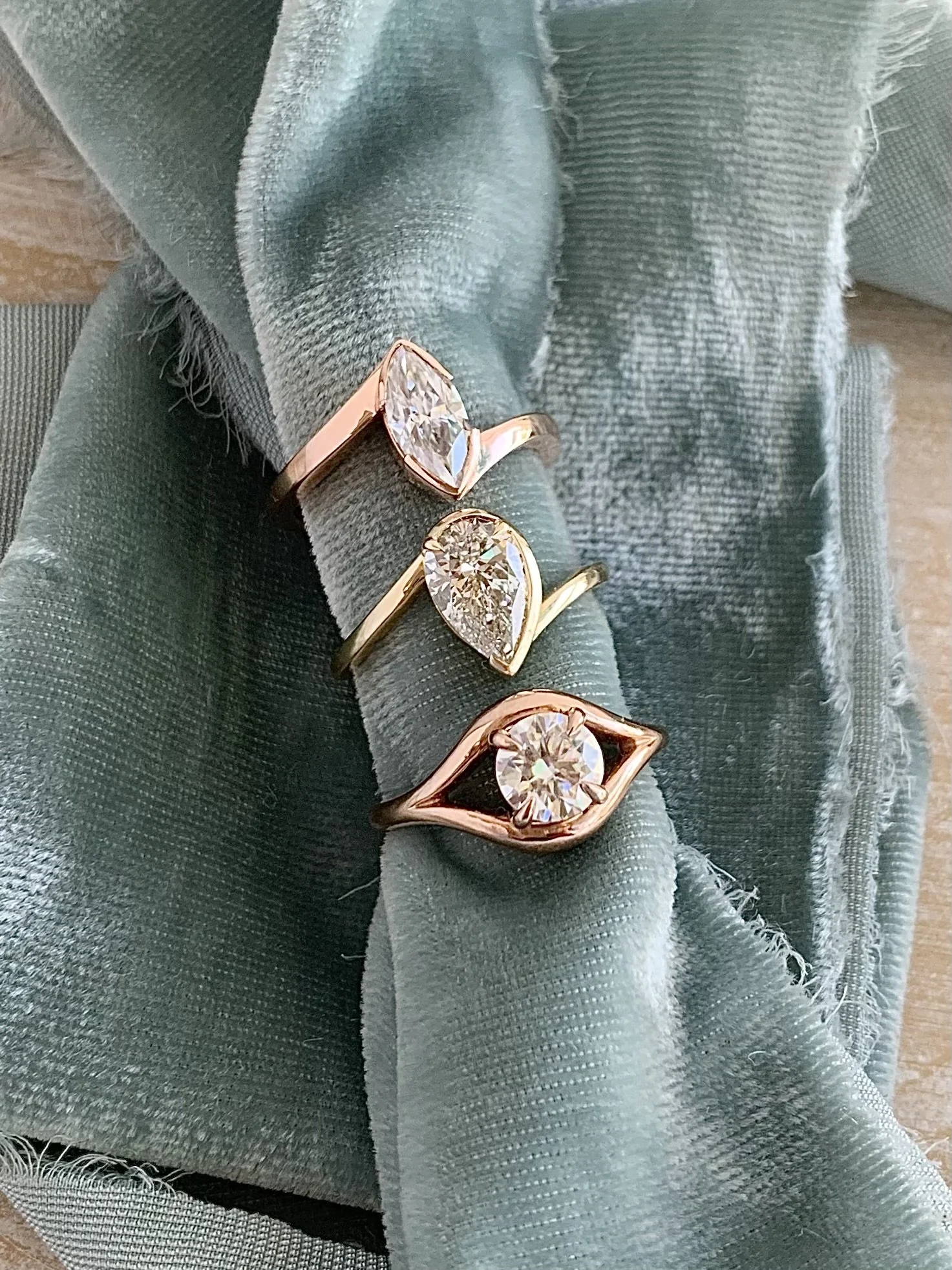
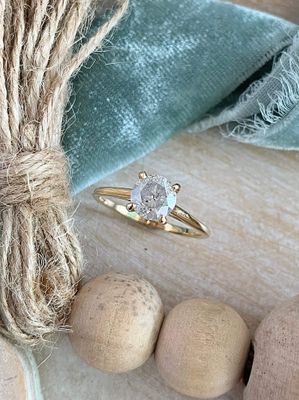
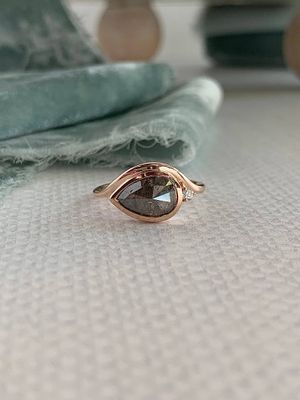
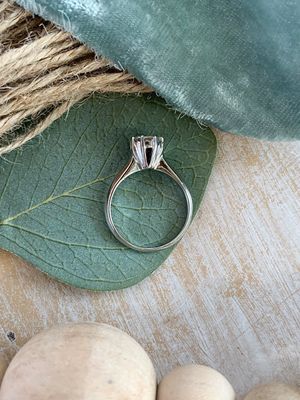
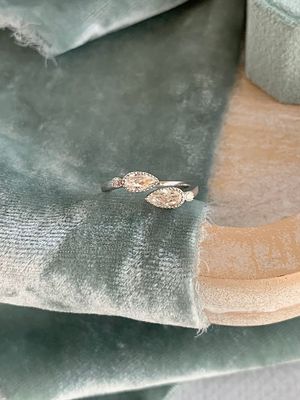
A marquise and a pear held in bezels, a round held in prongs. The setting decides how a solitaire sits on the hand and how much of the stone you see — and the case has a few worth trying on.
A solitaire is the simplest ring there is, which is exactly why the setting matters so much. With one stone and nothing to distract from it, the metal holding it is the whole design.
The bezel
The two rings at the top of the photograph are bezel set: a thin collar of metal wraps the edge of the stone. It is the most protective way to hold a diamond, it never catches on a sweater, and it gives a marquise or a pear a clean, drawn outline — the shape of the stone becomes the shape of the ring. A bezel also sits low, which suits hands that work.
The prong
The round at the bottom is held in prongs, with the band split around it so the stone appears to float. Prongs show the most of a stone and let the most light in from the side, which is why they are the classic choice for a round brilliant. The trade is that they stand a little taller and want checking every year or so.
Trying them on
The difference between the two is hard to see in a photograph and obvious on a finger. The rings below are in the case now, each one of a kind, and any of them can be tried on beside the others. If the stone you want is in one and the setting you want is in another, that is where a custom piece starts.
In this story
The pieces
Browse